Flooring Costs in 2026: Materials, Prices and Room-by-Room Choices
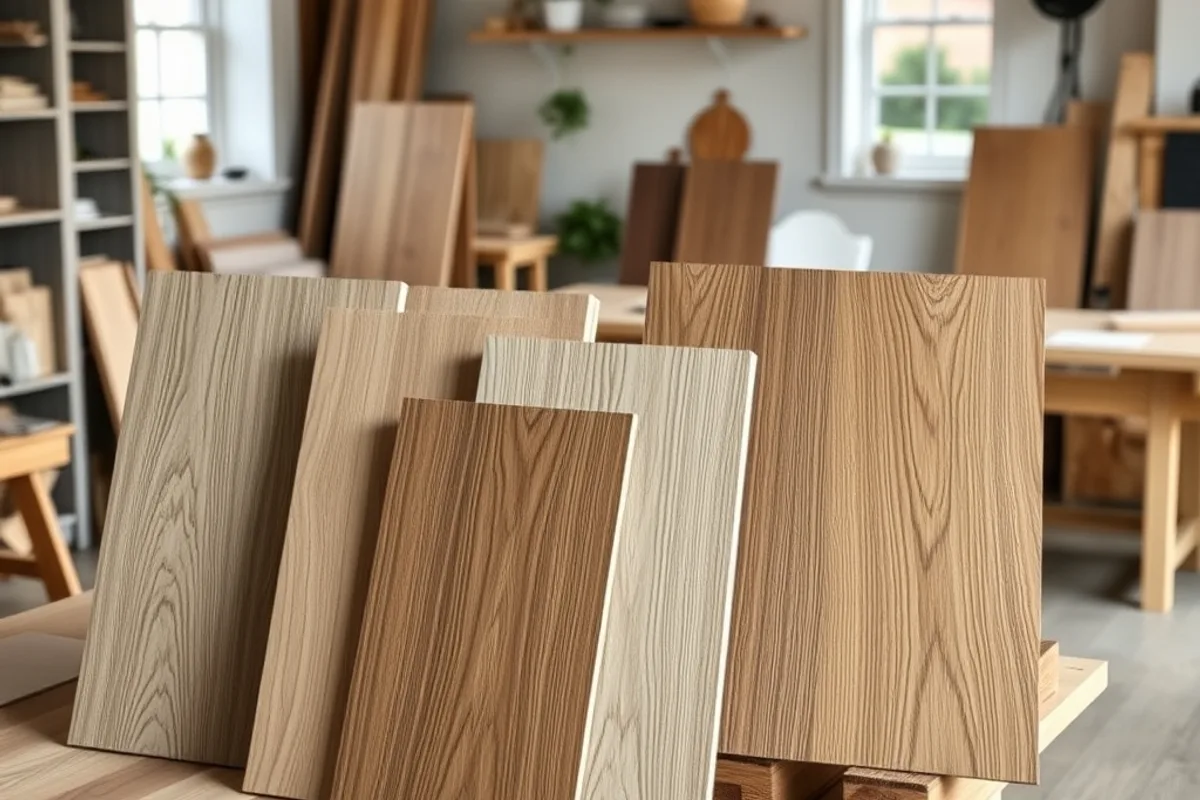
Flooring quotes are usually compared on the price of the material per square metre, which is the least useful number in the decision. The floor that lasts twenty years is the one with a dry, flat subfloor, the right underlay and an installation suited to the room. Get those wrong and the most expensive plank will fail as fast as the cheapest.
Material costs compared
Laminate is the cheapest hard floor at $15 to $45 per square metre for the boards, with installation at $15 to $30. It is dimensionally stable and easy to lay as a floating floor, but it cannot be sanded and it dislikes standing water. Modern AC4 and AC5 wear ratings are genuinely durable in a hallway or living room.
Engineered wood costs $45 to $130 per square metre. The top layer is real timber, usually 2 to 6 millimetres, so it can be sanded once or twice. It looks and feels like wood underfoot and handles humidity better than solid timber. Installation adds $25 to $50 per square metre, more for herringbone or glue-down.
Luxury vinyl tile costs $25 to $70 per square metre. It is waterproof, warm underfoot and forgiving in kitchens and bathrooms. The wear layer matters more than the thickness of the plank: look for 0.55 mm or more in a busy home. It does not add resale value like timber, but it is the most practical choice in a wet room.
Porcelain tile costs $30 to $120 per square metre for the tile, with labour at $40 to $100 because cutting, levelling and grouting take time. Large-format tiles need a very flat substrate. Tile is the most durable and the coldest underfoot; underfloor heating makes it comfortable but adds $40 to $80 per square metre.
The costs quotes leave out
Subfloor preparation is the biggest omission. Removing old adhesive, levelling compound, plywood overlay and moisture testing can add $10 to $35 per square metre. A floor laid over a damp or uneven slab will fail regardless of the material. Always test for moisture and confirm the substrate is dry before installation.
Underlay costs $4 to $15 per square metre. Acoustic underlay reduces impact noise in flats and upper floors; a cheap foam roll does little. Trims, thresholds, skirting and door undercutting add $15 to $40 per linear metre or per door. Stair nosings and edge details are priced individually.
Room by room
Kitchen
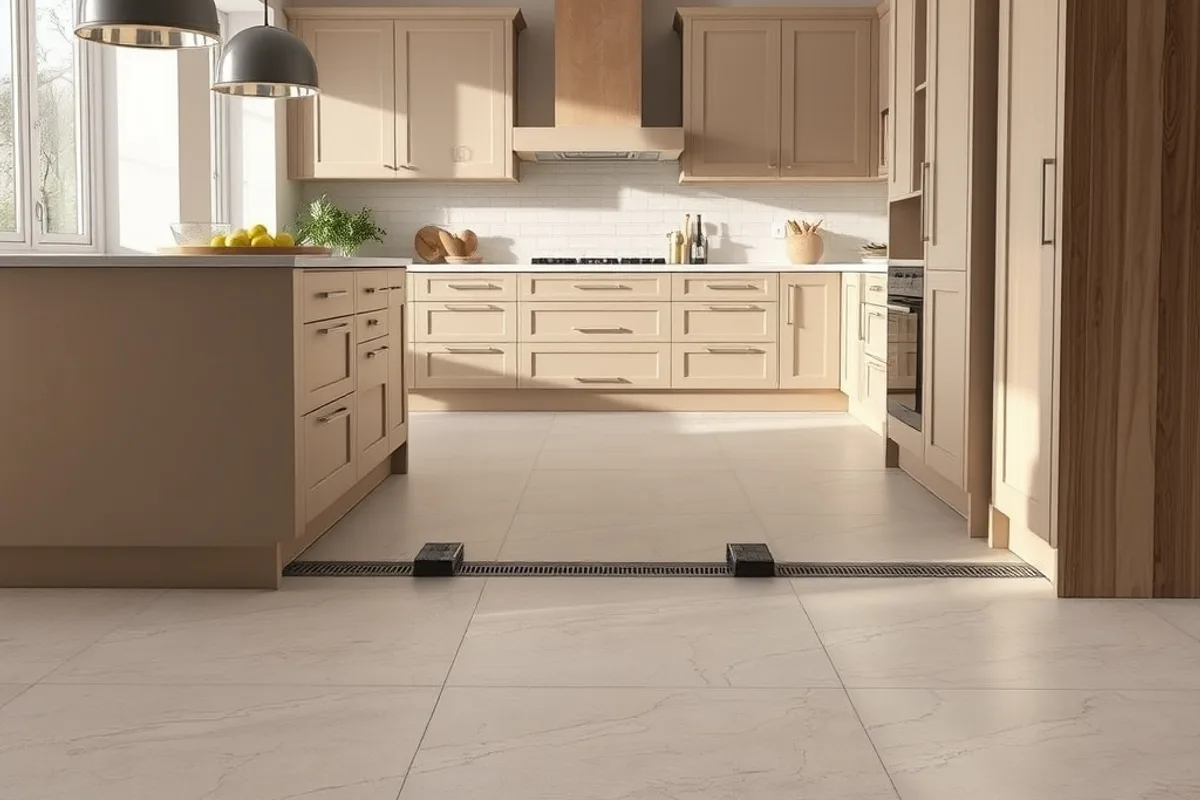
Choose tile, LVT or engineered wood with a water-resistant finish. Laminate is possible but risky near a dishwasher or sink. A large-format porcelain tile with a matte finish hides crumbs and survives dropped pans. If you want wood, engineered oak with a hard lacquer is the practical compromise.
Bathroom
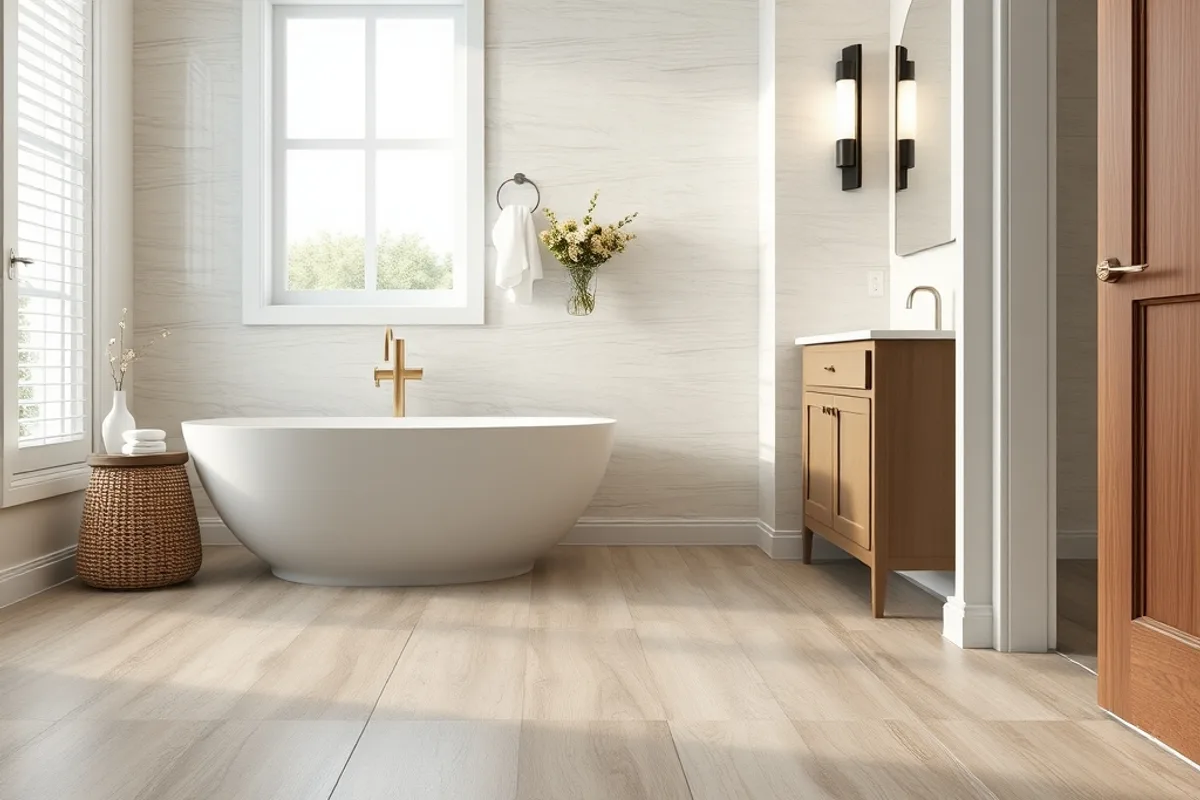
Use porcelain tile or LVT rated for wet rooms, with a waterproof substrate and sealed joints. Engineered wood and laminate are not suitable unless the manufacturer explicitly rates them for bathrooms and the room is well ventilated. A heated floor makes tile comfortable and helps the room dry.
Living room and bedrooms
Engineered wood or a high-quality laminate gives warmth and quiet. Carpet remains the cheapest acoustic option and is still the best choice for stairs and bedrooms if allergies are not a concern. A good carpet underlay extends life and reduces noise.
Hallway and stairs
This is the highest-traffic area and the one that shows wear first. Choose a hard floor with a high wear rating, or a wool carpet with a dense pile. Stairs need a compatible nosing and a consistent riser height; a loose nosing is a fall hazard. Avoid very smooth tiles on stairs.
Installation methods and their risks
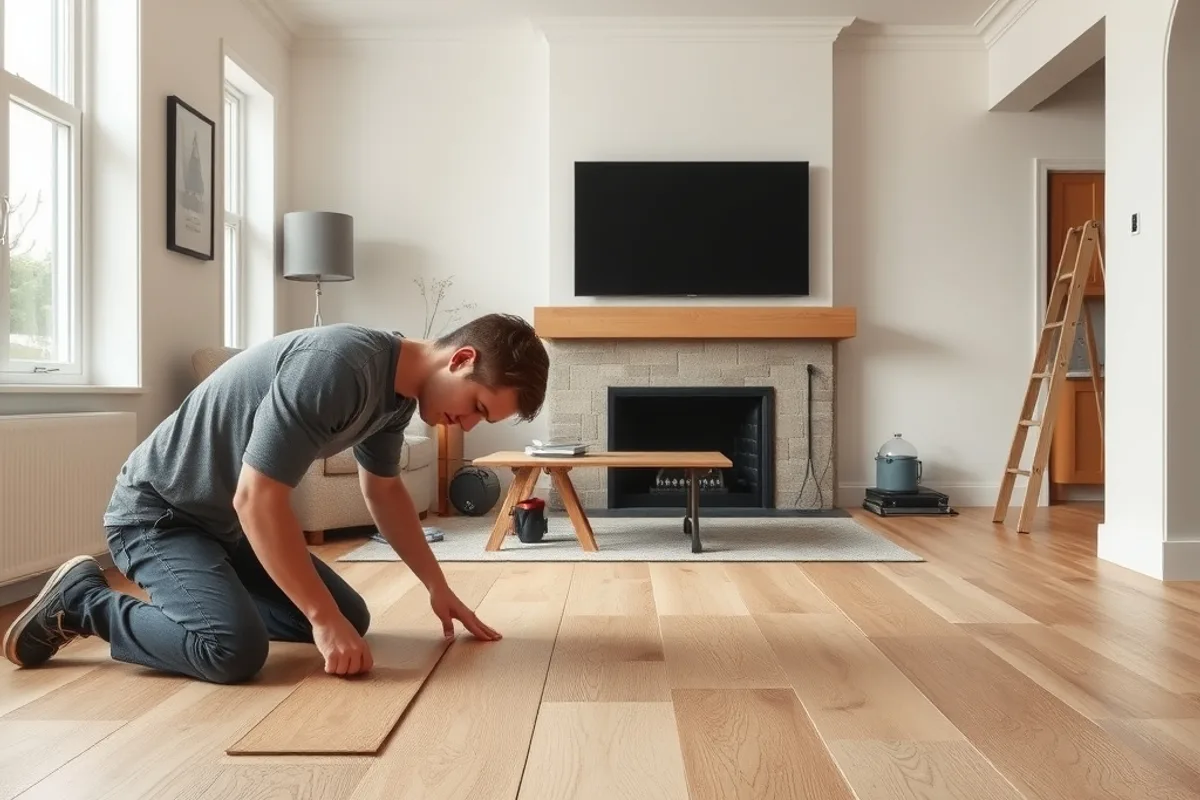
Floating floors click together over underlay and are fast, but they need expansion gaps at the perimeter and a flat substrate. Glue-down installation is more stable and quieter underfoot, and it suits engineered wood and LVT. Nail-down is for solid timber over joists. Each method has a different tolerance for moisture and movement.
Acclimatise wood and laminate in the room for 48 to 72 hours before laying. Check the moisture content of the subfloor, especially in a new extension or a ground-floor slab. A $20 moisture meter prevents a $5,000 replacement. For wet areas, follow the waterproofing guidance in our bathroom remodel guide.
"You are not buying a floor. You are buying the preparation, the underlay and the installation, with some boards on top."
The bottom line
Compare total installed cost, not the ticket price of the boards. Put money into subfloor preparation and underlay, choose the material for the room rather than the photograph, and keep a spare box for repairs. The right floor is the one that still looks deliberate after ten years of shoes, chairs and water.